

UAE experts share how to choose the right tutor, spot red flags, and support your child through home learning
As home learning continues across the UAE, many parents are asking the same question: do we need a tutor, and if so, how do we choose the right one?
Balancing work, multiple children, screen time and school expectations is no small task, and the pressure to “get it right” can feel overwhelming.
Demand for tutors across Dubai and Abu Dhabi has risen sharply, but with more options than ever, from private tutors to small-group sessions and co-learning setups, it isn’t always clear what will genuinely help your child.
For many families, the challenge isn’t just academic; it’s managing motivation, routine, and focus each day.
To help parents cut through the noise, we spoke to Giorgia Barnes, an education specialist, former Dubai primary school teacher, and founder of Just Learn DXB – a tutoring service for children (FS–Year 6) known for its personalised, creative approach, and Lou Wilner, co-founder of Knowledge Connection Emirates, a UAE-based network that matches students with tutors based on their individual needs, learning styles, and goals.
Drawing on their experience working with families across Dubai and Abu Dhabi, they share what effective tutoring really looks like, when it’s worth considering and how to avoid common pitfalls.
How to choose the right tutor in the UAE
“A tutor is not a babysitter” and other common mistakes

“One of the most common misconceptions is trying to fill all online learning time with a tutor,” says Lou. “A tutor is not a babysitter. The goal isn’t to sit beside a child all day or replace school learning, but to guide them strategically.”
In reality, less is often more.
“A few focused hours each week, outside of school time, is usually far more effective,” she adds. “Good tutoring should help a child build independence, not create reliance.”
Giorgia notices the same pattern. “It’s not about getting work done, it’s about how a child learns,” she explains. “That’s where the real, long-term impact is made.”
When should you hire a tutor, and when should you not?
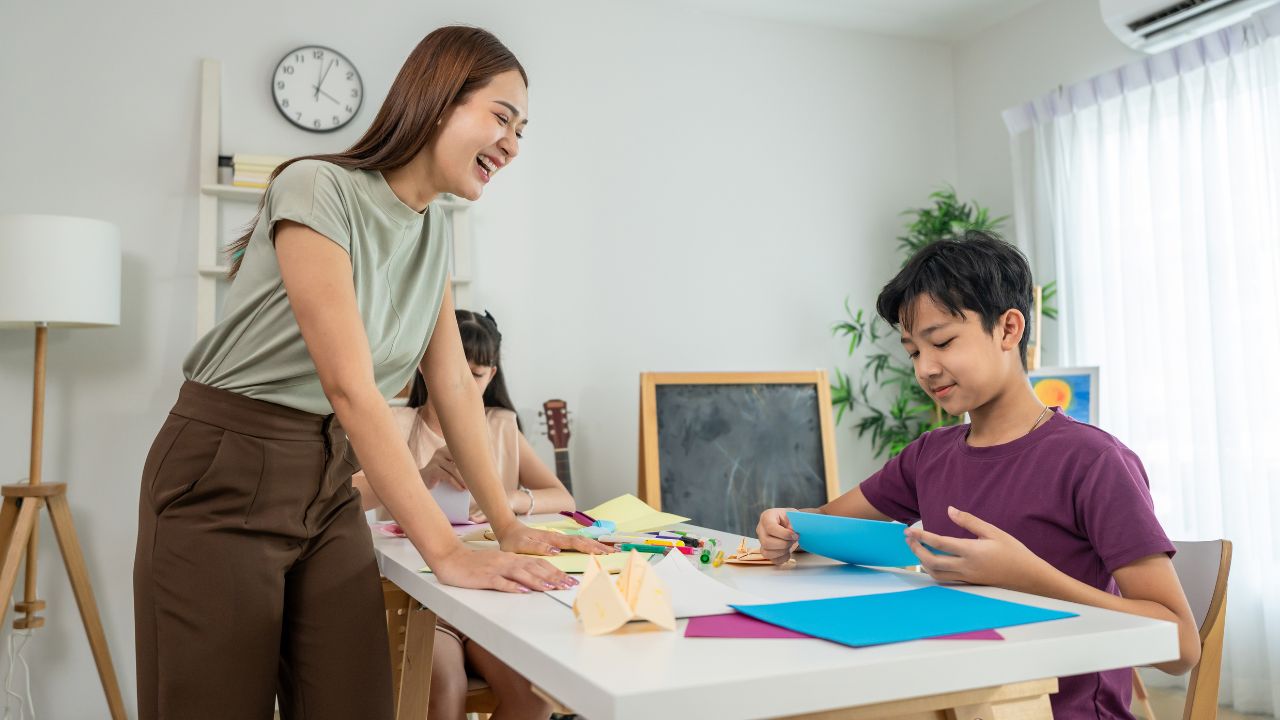
Not every child requires additional help. “Extra support isn’t always needed,” says Giorgia. “It’s important not to bring in a tutor just because it feels like ‘the thing to do.’”
However, there are clear signs when support can help:
- Your child is becoming frustrated or disengaged
- Gaps are forming in reading, writing or maths
- Home learning is starting to cause stress at home
At the same time, balance matters.
“Children are already busy… they need time to rest too,” she adds.
Quick guide: Do you actually need a tutor?
- Consider a tutor if:
Your child is disengaged, falling behind, or losing confidence - You may not need one if:
Your child is managing independently with structure and support - Start with:
A clear routine, independence, and short, focused learning sessions
What good tutoring looks like in practice
This is where many parents get caught out. “The most effective tutoring is truly personalised to your child, shaped around their individual needs, abilities and interests,” says Giorgia.
“It’s about helping them realise what they’re capable of, building confidence, independence and a positive attitude towards learning.”
In practice, that means sessions that are:
- Flexible and responsive
- Interactive and engaging
- Aligned, where possible, with school learning
“Our sessions are flexible, creative and practical… It’s about responding to the child in front of us,” she explains.
Lou reinforces the bigger picture: “Good tutoring is not just about improving grades, it’s about learning how to learn and fostering a love of learning.”
You might also like: The best free online learning platforms for kids in the UAE
What parents should look for — and avoid
Choosing well makes all the difference, and convenience shouldn’t drive the decision.
“It’s important not to choose a tutor based purely on availability,” says Lou. “The right match matters much more than convenience. Often, the best tutor is someone your child connects with and feels comfortable around.”
Look for:
- Strong rapport and a natural connection with your child
- Relevant experience for your child’s needs
- Clear communication on progress and next steps
- Sessions that are personalised and adaptable
- A balance of structure and enjoyment
“Sessions should be both fun and productive, something your child looks forward to,” says Giorgia.
Avoid:
- Overly rigid or worksheet-heavy sessions
- Little or no feedback on progress
- Locking into fixed packages too early
- Choosing based purely on price
“High-quality tutoring often reflects the time and preparation that goes into tailoring each session,” she notes.
Before you hire: what UAE parents need to check

Before hiring a tutor, it’s important to check they are properly authorised to work in the UAE.
Private tutoring is legal, but tutors must obtain a valid permit issued by the UAE’s Ministry of Human Resources and Emiratisation (MOHRE), which introduced the regulation in 2023. This requires ID verification, a police clearance certificate, and, where applicable, employer approval. The permit is free to apply for, valid for two years, and renewable.
It’s also worth noting that private individuals – including non-teachers and students over the age of 15 – can apply to be tutors.
If you’re working with an agency, ensure it is licensed to operate. And where teachers are involved, they are not permitted to tutor students from their own class, to avoid conflicts of interest.
While a permit is not a guarantee of quality, it is an essential first step for parents in ensuring safety, professionalism and accountability.
What can help home learning work (with or without a tutor)

Even with the right tutor in place, what happens at home matters just as much.
“The home setup plays a bigger role than many expect,” says Lou. “Learning works best when it has a clear space and structure, a proper desk, a consistent routine, and minimal distractions. The corner of a sofa with a laptop rarely sets a child up for success.”
“Breaks are just as important as study time… screen-free moments help reset focus and reduce fatigue.”
And importantly: “Try not to cancel all extracurricular activities as they are essential parts of learning and development. Children build confidence, discipline and resilience in these spaces.”
Giorgia’s 5 practical tips for home learning
- Keep learning time focused
Long sessions often lead to frustration; shorter, more effective bursts work far better. - Build in regular brain breaks
Movement resets focus. Use breaks for something enjoyable; go outdoors, play, or simply change the pace. - Don’t stress about missed live lessons
They help with routine, but most learning can be revisited in a way that fits your day. - Be prepared to adapt
If something isn’t working, change it; shorten the task, make it more practical, or turn it into a conversation. - Prioritise connection, not perfection
Feeling safe, supported and calm at home matters just as much as the learning itself.
Final advice?
“If I could give parents one piece of advice,” says Giorgia, “it’s not to feel pressure to fill every part of your child’s timetable.”
And from Lou: “Focused sessions at the right time, with the right tutor, tend to deliver far more meaningful and lasting progress.”
For further information, see kcemirates.com or WhatsApp 058 533 6893 or visit @JustLearnDXB.
Follow Yalla for all the latest news