
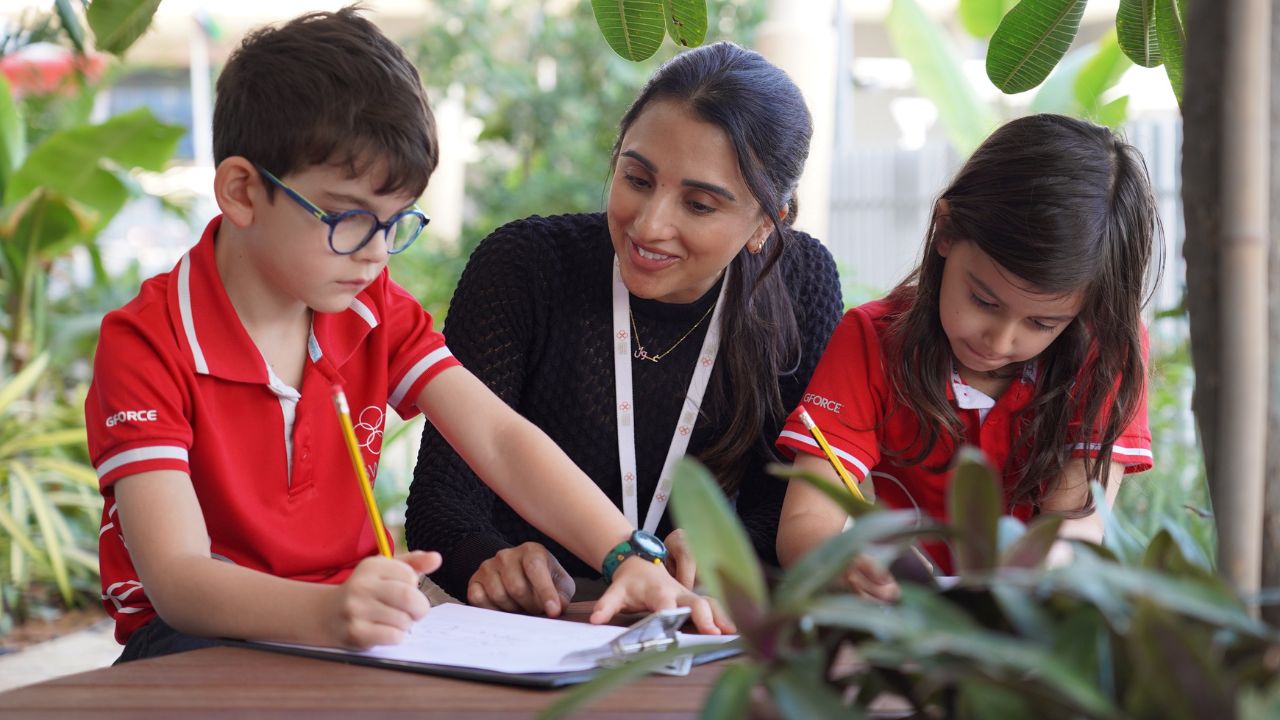
Swiss International Scientific School Dubai shares how students are learning sustainability and biodiversity from the ground up
May marks World Bee Day – a chance to reflect on the vital role of bees and biodiversity in sustaining our planet.
At Swiss International Scientific School Dubai (SISD), these themes aren’t just explored once a year but are embedded throughout daily learning.
Whether it’s discovering a native bee hive on campus, designing bee-friendly gardens or growing crops in water-wise hydroponic systems, SISD’s approach to sustainability is hands-on, pupil-led and rooted in local context.
“Projects and initiatives happen all year round to ensure we are developing an authentic appreciation of eco-centric living,” says Gullrukh Rafiq, Assistant Head Sustainability and Social Impact Lead at SISD.
“Having nature as a core factor and understanding all the elements that connect to allow our interdependency is vital.”
A recent highlight was when Grade 1 students stumbled across a native bee hive on campus. Rather than removing it immediately, the school embraced the opportunity for discovery.
“Our animal welfare ambassadors and Grade 1 students created information posters about the bees and shared these in assemblies. This was a great opportunity to learn from our local environment,” explains Gullrukh.
You might also like: Top eco-friendly schools in Dubai leading sustainability in 2025
Small bees, big lessons

Bees, often described as nature’s tiny superheroes, provide an ideal entry point into broader sustainability topics.
“We use their story to introduce interdependence in ecosystems, the importance of pollination for food security, and the consequences of biodiversity loss,” notes Gullrukh.
“In one animal welfare project, students designed bee-friendly gardens and created awareness on ethical consumption. Through this, they not only learned scientific facts but also developed empathy and advocacy skills.”
The schools’ bee relocation project further deepened students’ understanding, encouraging thoughtful reflection on conservation and co-existence with the natural world.
“We connect biodiversity to students’ everyday experiences through hands-on learning that brings the concept to life in our local context,” says Gullrukh.
Through the IB ‘Sharing the Planet’ units, learners explore how living things interact and depend on one another, beginning with simple observations in the school’s eco-garden and progressing towards real-world action.
You might also like: Win a signed copy of this month’s book, Kind Little Hands– two lucky winners!
Sustainability as a way of life
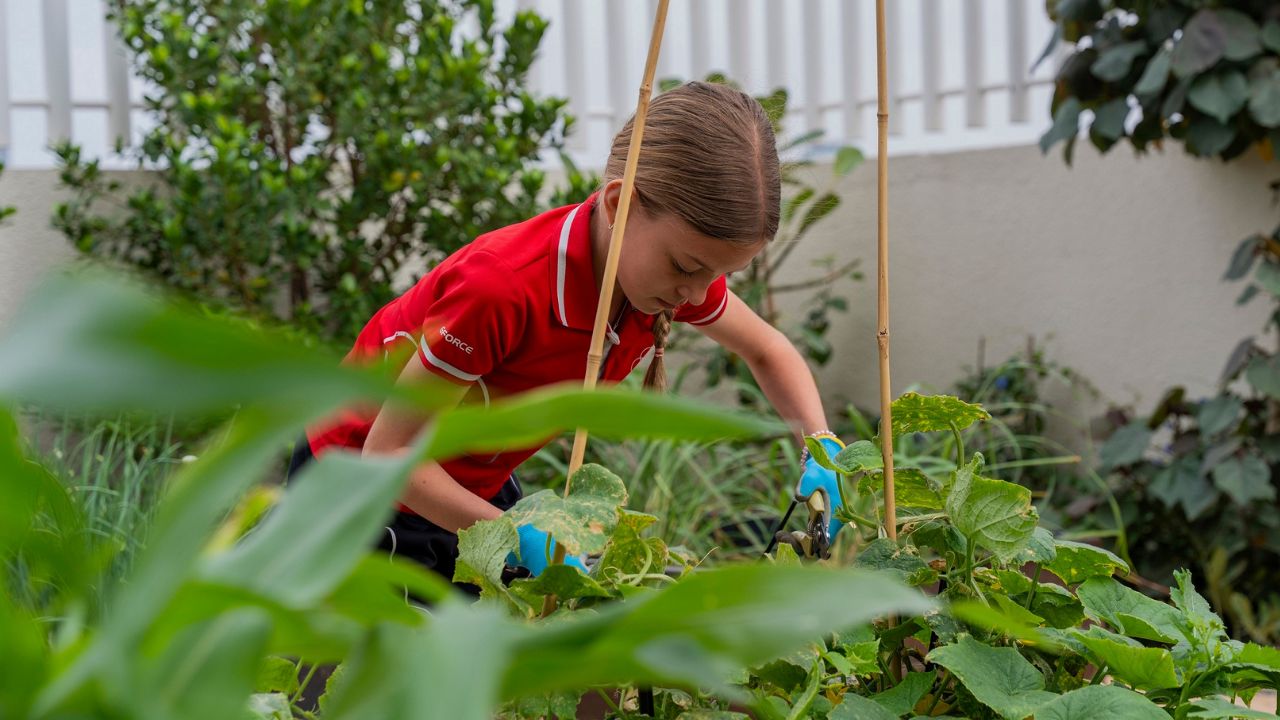
Sustainability at SISD is more than a topic—it’s a way of life. The school’s edible garden beds, managed by students across year groups, emphasise seasonal, UAE-adapted planting.
In Grade 4, children participate in a hydroponics initiative to explore alternative growing methods for water-scarce regions.
Beyond planting, SISD has implemented a plastic-free policy for school events, runs regular recycling drives, and integrates animal welfare into the curriculum.
“Through the Nord Anglia Global Campus platform, TASS, and the Eco-Schools framework, we foster partnerships that extend learning beyond our walls,” says Gullrukh.
The school’s Green Team is student-led and plays a key role in shaping campus-wide sustainability efforts.
“They run awareness campaigns, conduct energy and waste audits, and mentor younger students,” Gullrukh explains.
From ethical farming to marine pollution, environmental themes are also a regular focus of the school’s PYP Exhibition projects, where students are encouraged to move beyond theory and propose their own solutions.
SISD also hosts innovation challenges aligned with the UN Sustainable Development Goals, giving students a platform to tackle local issues with global impact in mind.
“Sustainability education is no longer optional—it’s essential,” says Rafiq. “We don’t treat sustainability as a standalone topic but as an integrated mindset,” she adds.
“Whether it’s caring for the environment, ethical food choices, or social justice, students see the interconnectedness of the issues and their role in creating solutions and lasting change.”
And at SISD, that change often begins with the smallest of creatures, proving that big lessons can come from tiny bees.
Follow Yalla for more educational news
