

CBSE exams begin 17 February 2026, and here’s what UAE parents need to know about key dates and the latest exam reforms
CBSE board exams are fast approaching, with Class 10 and Class 12 papers officially starting on 17 February 2026.
Whether your child is preparing to sit these important assessments or you’re considering the CBSE pathway in the future, here’s a clear, parent-friendly guide to what’s changing and what it means for families in the UAE.
The Central Board of Secondary Education (CBSE) has confirmed the February exam start date, along with several updates affecting students in India and at CBSE-affiliated schools across the UAE.
These include a two-exam structure for Class 10 (with an optional second sitting in May for improvement in up to three subjects), a stronger focus on skills and application, and ongoing reforms aligned with India’s National Education Policy (NEP 2020).
When are the CBSE exams in 2026?
CBSE has officially scheduled the 2026 board exams as follows:
- Class 10 exams: Begin on 17 February 2026, with most core subjects concluding by mid-March.
- Class 12 exams: Begin on 17 February 2026 and typically run through mid-April, depending on the subject combinations.
Exact subject dates — particularly for languages, arts and vocational subjects — are confirmed by individual schools and exam centres. Admit cards are issued to schools via the official CBSE Pariksha Sangam portal, and schools will share these directly with students.
What are the CBSE board exams?
CBSE board exams are centralised, end-of-course assessments taken by students at two key stages:
- Class 10: Marks the completion of secondary education and helps determine progression into senior secondary subject streams.
- Class 12: A critical qualification for university admission in India, the UAE and internationally.
For students studying the CBSE curriculum in the UAE — at schools regulated by KHDA (Dubai), ADEK (Abu Dhabi) or SPEA (Sharjah) — the exams are identical to those sat in India and are widely recognised by universities worldwide.
Key changes for CBSE students in 2026
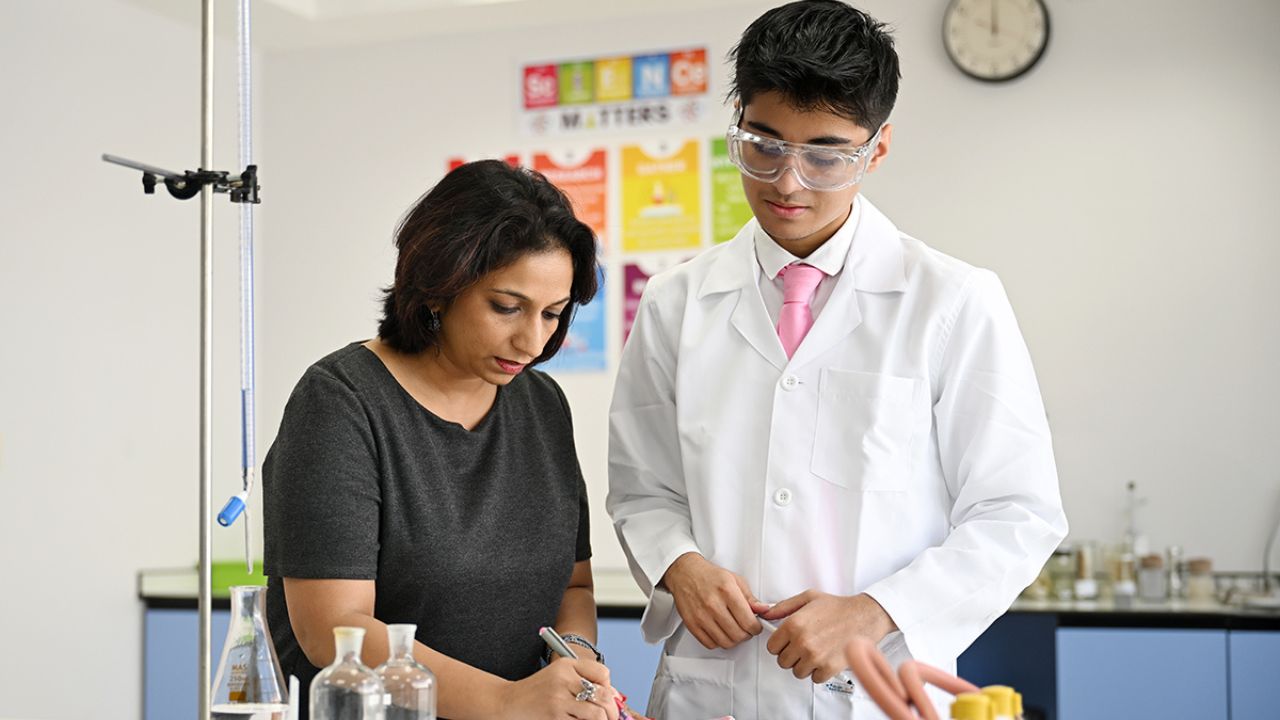
The 2026 exam cycle continues CBSE’s shift towards lower stress, greater flexibility and stronger real-world relevance.
1. Two board exam windows for Class 10
For the first time, Class 10 students can sit the board exams in two stages:
- Main examination: February–March 2026 (mandatory for all students)
- Second examination: May 2026, available to eligible students wishing to improve results in up to three subjects
This second sitting is optional and designed specifically for performance improvement, not as a resit for failed subjects. CBSE expects results from the first exam in April and results from the second exam in June.
The aim is to reduce pressure and give students a second chance to demonstrate their best work, rather than placing everything on a single exam window.
2. Greater focus on competency and understanding
Across subjects, exam papers now place more weight on how students apply what they know, not just what they can memorise. This includes:
- Conceptual and application-based questions
- MCQs (multiple-choice questions) that test understanding rather than recall
- Case-based and problem-solving questions linked to real-life scenarios
This reflects a broader shift away from rote learning toward critical thinking, reasoning, and analysis.
3. What this means in the classroom
Alongside exam changes, CBSE schools are increasingly expected to adopt hands-on, inquiry-based teaching methods, including:
- Project-based learning tied to real-world problems
- Greater emphasis on questioning, discussion and exploration
- Increased use of digital tools and technology, including AI-supported learning resources
The goal is to ensure students understand concepts deeply and can apply them confidently beyond the exam hall.
4. Updates for Class 12 students
While Class 12 continues to have a single board exam period, there is growing emphasis on:
- Skill-based and vocational electives, such as Design Thinking, Artificial Intelligence, Electronics & Hardware, Computer Applications
- Internal assessments and project work, which contribute meaningfully to final grades
These changes are intended to better prepare students for university, careers and future-focused study pathways.
5. Attendance requirements
Students typically must meet a minimum 75% attendance threshold to be eligible for board examinations, underscoring the importance of consistent engagement throughout the year.
Where can you study CBSE in the UAE?
CBSE education is well established across the UAE, supported by a large Indian expatriate community.
According to CBSE officials, there are c.106 CBSE-affiliated schools nationwide, making the UAE the largest hub for CBSE education outside India. In Dubai alone, Indian-curriculum schools account for around 26% of total private-school enrolment, the second-largest curriculum group after British schools.
CBSE schools are primarily located in Dubai, Abu Dhabi, and Sharjah, offering education from Class 1 to Class 12 (Kindergarten to Grade 12).
Which are the best schools for the CBSE curriculum in Dubai?
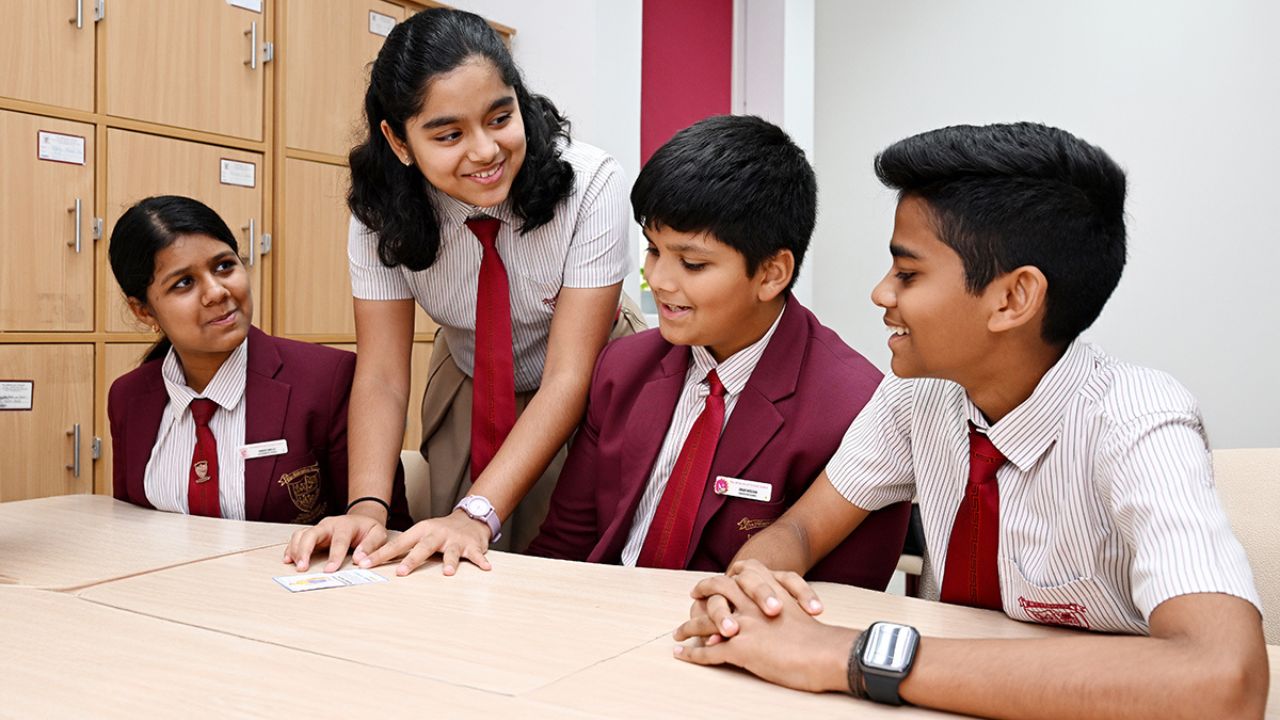
The most recent inspection reports cover the 2023-24 cycle for schools following the Indian curricula.
Some highly rated CBSE schools (Outstanding/Very Good) include:
Dubai and Sharjah
- GEMS Modern Academy — Outstanding (KHDA)
- Delhi Private School, Dubai — Very Good (KHDA)
- The Millennium School, Dubai — Very Good (KHDA)
- GEMS Our Own English High School — Very Good (KHDA)
- The Indian High School — Very Good (KHDA)
- GEMS Our Own Indian School — Very Good (KHDA)
- GEMS Millennium School, Sharjah — Outstanding (SPEA)
Inspection ratings are updated annually; parents are encouraged to check the latest KHDA, ADEK or SPEA reports.
CBSE curriculum at a glance

Ages and stages
Kindergarten to Grade 12
Key assessments
National board exams in Classes 10 and 12
Assessment style
Exam-led, with increasing emphasis on application and skills
What makes it distinctive
- Strong focus on Mathematics and Sciences
- Structured, linear progression
- Clear academic benchmarks
Where it leads
- Indian universities
- Growing access to UK, US, UAE and international STEM programmes
Best suited to
Highly academic students, particularly those aiming for Engineering, Medicine, Technology or Science-based degrees
Follow Yalla for all the latest education news