
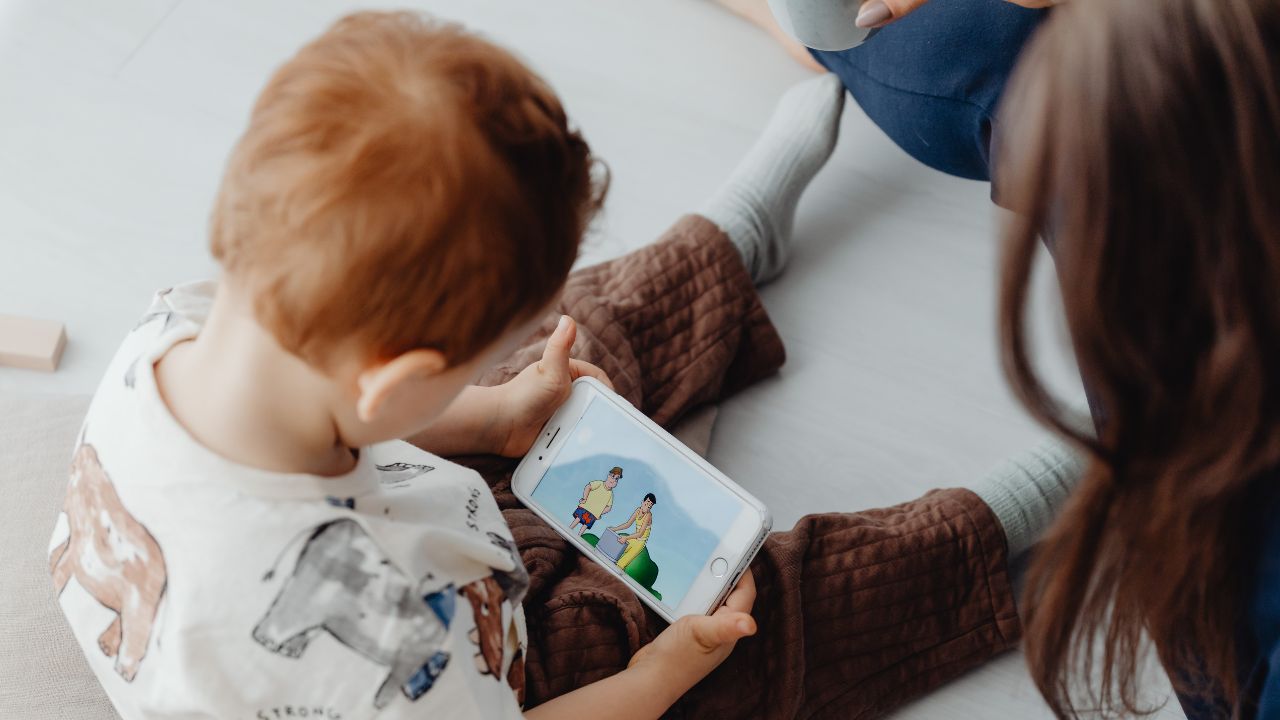
New UK research links screen time at age two to language and behaviour prompting parents to rethink balance in the Early Years
Screens are part of modern family life. For many parents, they are practical tools in busy households. The question is no longer whether children will use technology, but when and how.
New UK research has prompted fresh discussion about how technology fits into early childhood. National data indicate that by age two, 98% of children use screens daily, averaging 127 minutes, more than double the World Health Organisation’s recommended limit.
Children in the highest screen-use group showed weaker vocabulary and were more likely to present with emotional and behavioural difficulties.
To understand what this means for families in the UAE, Yalla spoke with Siog Moore, Principal and Founder of Little Land Nursery Dubai, one of the region’s few fully screen-free nurseries. She emphasises balance: this isn’t about banning tech long term, but about timing and intention in the Early Years. She says, “I am not anti-technology. I am pro-childhood.”
Here, she shares her perspective on why her setting has chosen a screen-free approach and practical tips for navigating screen use at home.
What led you to adopt a screen-free approach?

Early childhood is a sensitive period for brain development. The foundations laid in these years influence emotional regulation, attention, communication and resilience for life.
I chose to be completely screen-free because I do not believe screens are necessary in early childhood education. Young children learn through movement, touch, repetition, conversation and human connection. A screen cannot replace that.
Parents are investing in early education, and while children are in our care, we want to offer rich, real-world experiences.
What does strong early learning look like in practice?

Best learning is relational. It is eye contact when children enter the room, getting down to their level, naming what they are doing, and waiting for their response.
Small, everyday moments — building roads for toy cars or tucking in a doll — are brain-building moments. Predictable routines create security. When children feel safe, they explore. Exploration is the foundation of learning.
From a Montessori perspective, how does a screen-free environment support concentration?

Montessori education is built on internal motivation. Children choose their work, repeat it, refine it and complete it. This develops concentration, independence and self-regulation.
A screen interrupts that flow. It introduces fast-paced external stimulation that competes with deep focus.
In a screen-free environment, children build attention from within. They learn to manage themselves rather than relying on something external to manage their attention.
How do you think screen use can influence attention and language?

When screens are a significant part of home life, I sometimes notice children are less inclined toward back-and-forth conversation. They may respond briefly, move quickly between activities or struggle to sustain shared attention.
Language grows through serve and return — a child points, an adult responds, and the exchange continues. That interaction builds communication, not just vocabulary.
We are not just teaching words. We are teaching children how to listen, respond, wait and feel heard.
What behavioural patterns do you observe?

Difficulty with transitions is the most noticeable. When a device is removed, the emotional response can be intense. Screens offer fast stimulation and instant reward. Real life is slower and requires patience.
Screens can appear calming in the moment, but that calm can stem from disconnection rather than regulation. When the screen is removed, the feelings that were paused often surface.
I sometimes see reduced frustration tolerance and difficulty sustaining attention in quieter activities. Sleep can also be affected, especially when screens are used before bedtime.
You might also like: The second edition of Yalla’s 100 StandOut UAE Schools Guide is here
What about educational apps and digital learning tools?

Some digital content is thoughtfully designed. The more important question is how young children learn best.
Under five, language grows through conversation, storytelling, singing, shared experiences and emotional connection.
If families choose to use screens, they can make it more intentional by sitting with their child, pausing content and discussing what they see.
The most powerful language builder will always be a responsive adult.
What practical advice would you offer UAE families at home?
The goal is not perfection. The goal is connection and intention.
- Prioritise at least ten minutes of fully present face-to-face time daily.
- Create clear and predictable boundaries around screen use.
- Keep screens out of bedrooms.
- Protect meal times as device-free time.
- Allow boredom. It is the beginning of creativity.
- Offer purposeful alternatives such as water play, drawing, music or helping in the kitchen.
- Model the behaviour you want to see.
Managing screens is not about restriction. It is about replacement.
When choosing a nursery, what should parents ask?
- Whether screens are used and why.
- How language is developed without devices.
- How concentration and independence are nurtured.
- How transitions are managed.
If a nursery uses screens, ask what children gain from that experience that could not be achieved through human interaction.
How should parents think about technology long term?
Balance is important. A completely screen-free existence is neither realistic nor necessary in the long term. The question is not whether children will use technology, but when and how.
Technology can be learned at any age, and self-control must be built early.
Follow Yalla for all the latest education news