
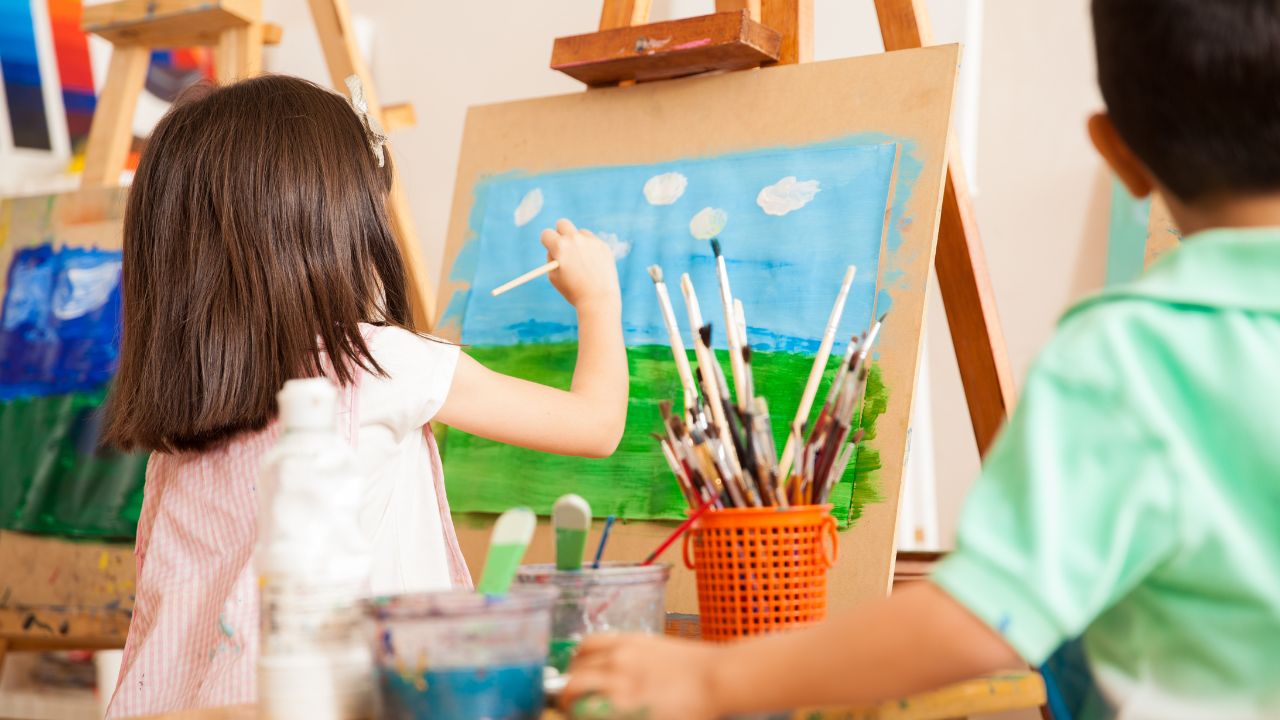
A practical, low-prep guide to building creativity at home, with expert advice from a Dubai art teacher
Spaghetti towers held together with marshmallows. Cardboard boxes turned into miniature worlds. Homemade playdough in colours that don’t quite match.
The most useful creative activities for children at home rarely involve expensive supplies, and according to one Dubai art teacher, they shouldn’t.
Encouraging creativity at home is one of the simplest things parents can do for a child’s wellbeing, confidence and problem-solving skills.
We spoke to Kay Bathke, founder of Dubai-based Camden Creative Arts, about how to make space for it at home without turning the kitchen into a workshop.
Why creativity matters for children
Creativity, Bathke says, isn’t a tidy after-school enrichment activity; it’s a developmental tool.
“When children have creative freedom, it is amazing for their confidence and wellbeing,” she says.
The benefits extend beyond what most parents realise: emotional intelligence, problem-solving, empathy, and the ability to see the world differently.
“I believe when children explore art and artists, they develop an appreciation for the world around them, giving them more understanding and empathy,” Bathke explains.
“It gives children the ability to look at their surroundings in a different way and draw parallels to what they have learnt, which builds their emotional intelligence.”
With STEM dominating much of the educational conversation, Bathke makes a case for the arts as its natural complement.
“The emphasis on innovation in STEM education goes hand in hand with the experimentation, exploration and creative thinking in art,” she says. “They are all interchangeable skills that are valuable across the curriculum and beyond.”
How to set up a creative corner at home
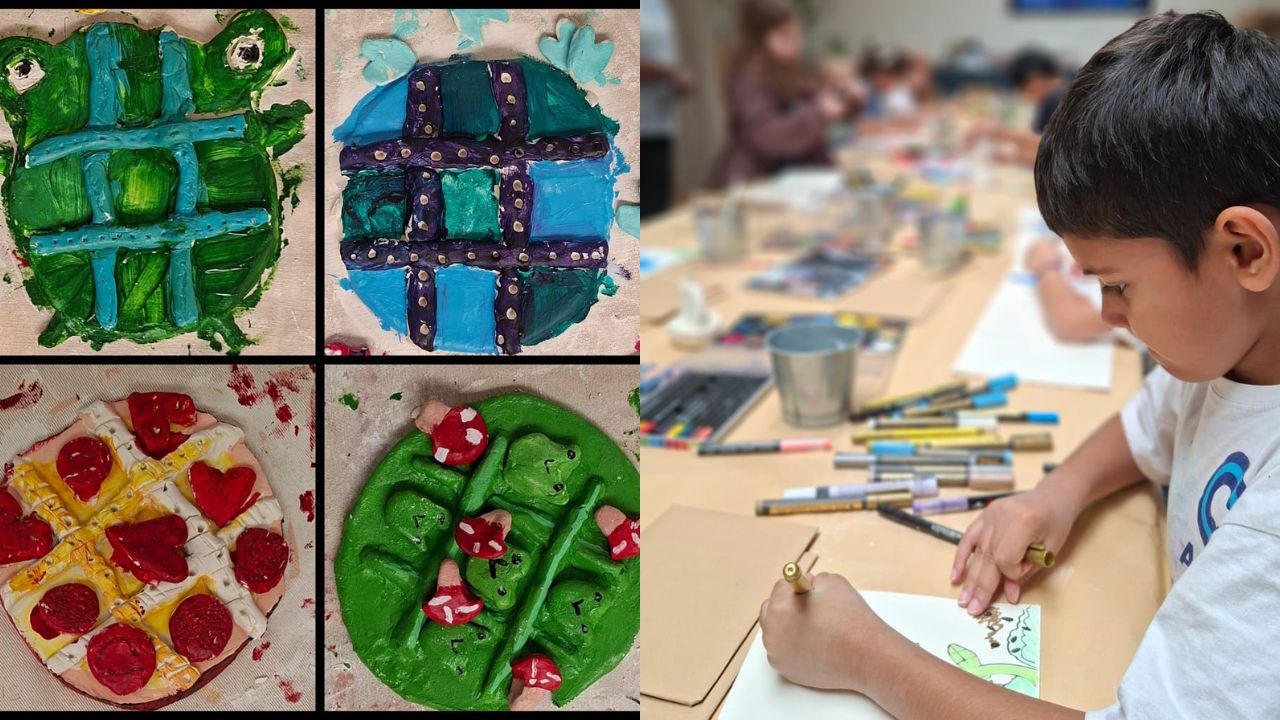
You don’t need a dedicated studio. A creative corner can live anywhere – a section of the living room, a quiet spot in the garden, or part of a bedroom or playroom. The point is to make creating feel possible without a parent having to set everything up first.
“Creating a space with resources that can be used during down times is a brilliant idea and simple to implement,” Bathke says.
Stocked with a few well-chosen materials (see below), it gives children somewhere to go when they want to make something.
“Have a few simple activities there for them to do. Lego, colouring, craft materials, and books are all great things to put out, whether that’s after school, on a quiet weekend morning, or during the holidays.”
You might also like: Beyond the right answer: how to help your child really love maths
Focus on process, not outcome
The single biggest mindset shift Bathke wants parents to make is this: stop asking how the finished piece looks. “Exploration during the process is where the magic happens,” she says. “Focusing on the outcome alone limits the possibilities and creates boundaries.”
That means resisting the urge to redirect a child painting the sky purple, or to tidy up a messy collage “so it looks nicer”.
The skill being built isn’t drawing or painting itself – it’s confidence, decision-making and self-expression. “There is no right or wrong way with art,” Bathke says. “If the expectation is centred on ideas and using imagination, then children are free to explore with no expectations on the outcome.”
Five low-prep creative activities to try this week
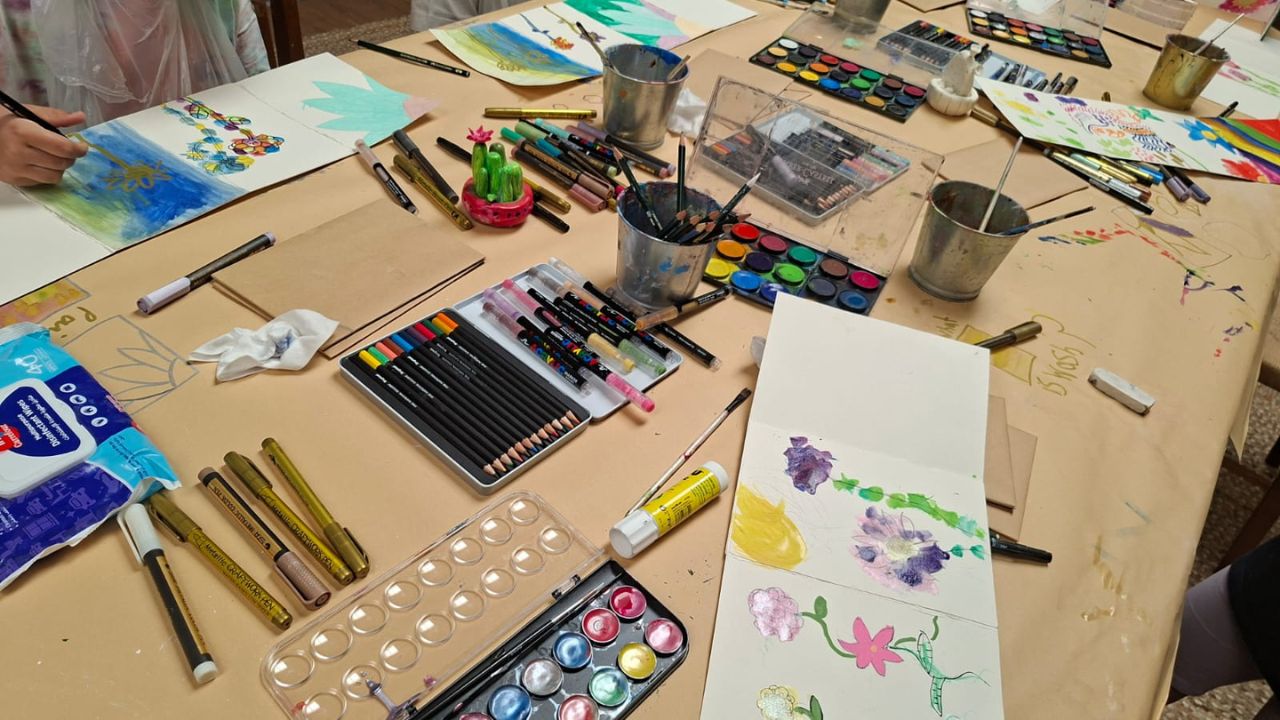
None of these ideas requires a trip to a craft shop. Most use what’s already in the home.
- Make your own playdough. Mix flour, salt and water and let the children do the mixing themselves. It produces a great clay substitute and keeps small hands busy for hours.
- Build a diorama. Hand over a shoebox and a pile of recycled materials, then offer a prompt to help start the creative process: “Design your perfect room” or “Create a fantasy land”.
- Construct a spaghetti-and-marshmallow tower. Dry spaghetti, marshmallows and a challenge: who can build the tallest one? It looks like a game. It’s actually structural problem-solving.
- Print with anything. Bubble wrap, tin foil, scrunched-up cardboard – dip them in washable paint and press onto paper. Bathke recommends this especially for children who say they “can’t draw”.
- Start a sketchbook habit. A small notebook and a pencil, used regularly to draw from life or imagination. “This can be a lovely time to take a little time out to reflect and relax,” Bathke says.
When your child says, “I’m not good at art”
Most children will say it at some point. Bathke’s response is to reframe what “good at art” actually means.
“Children sometimes associate being good at art with being able to copy something so it looks like the original artwork,” she says.
“We follow a more expressive approach and encourage children to be original in their process. We always emphasise that there is no right or wrong way in art.”
She points to Picasso: “Every child is an artist. The problem is how to remain an artist once we grow up.” Shifting that mindset early, Bathke says, is one of the most useful things a parent can do.
The simplest takeaway is also the most generous: protect screen-free time for your child to make something, with no expectation about what comes out the other end.
The materials don’t need to be expensive. The space doesn’t need to be perfect. The point isn’t the painting on the fridge – it’s the child who painted it.
How to build a creative corner: what to buy
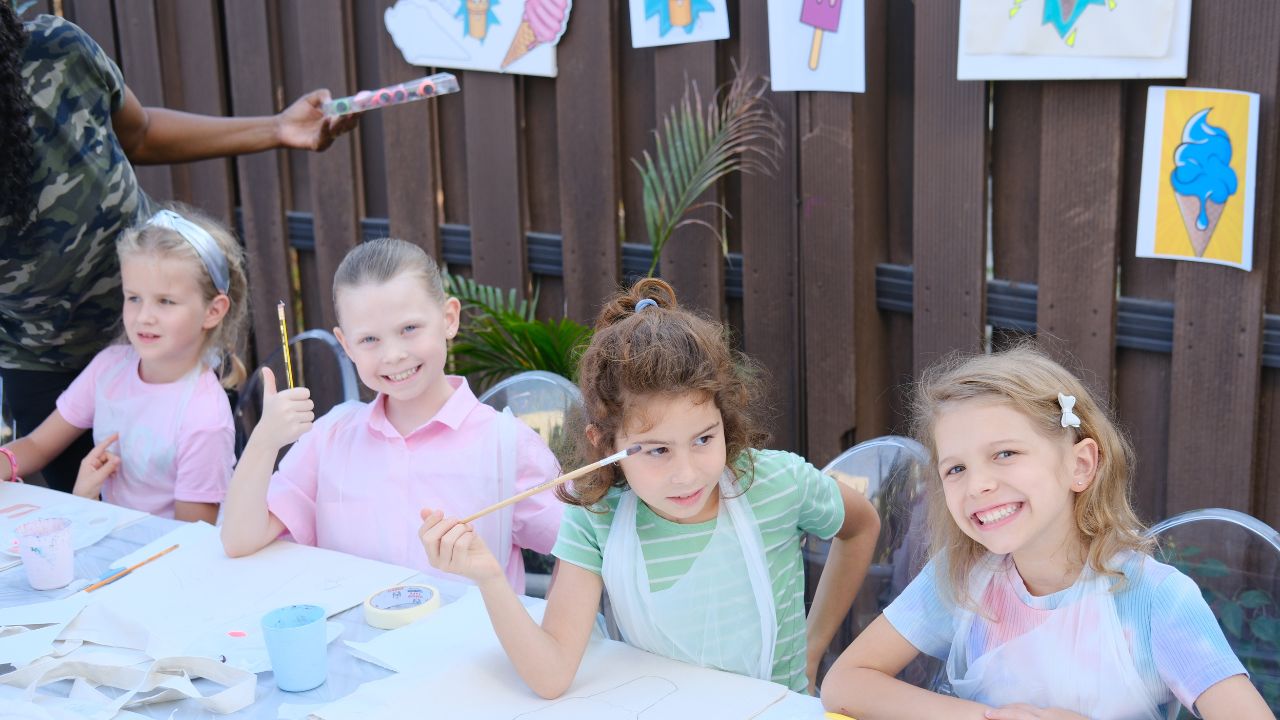
Stock up on these basics, and you’ll have everything a child needs to start a project on their own:
- Pencils and coloured pencils
- Oil pastels and crayons
- Markers or felt-tip pens
- Watercolour paints and washable paints
- Paintbrushes and water pots
- Scissors and a glue stick
- Coloured paper, plus old magazines and newspapers for collage
- A roll of paper for larger drawings
- Recycled materials for building and 3D work
- Clay or playdough
For further information, visit camdencreativearts.com
Follow Yalla for all the latest news