
From den-building to bug hunts, why outdoor learning supports children’s wellbeing, focus and creativity
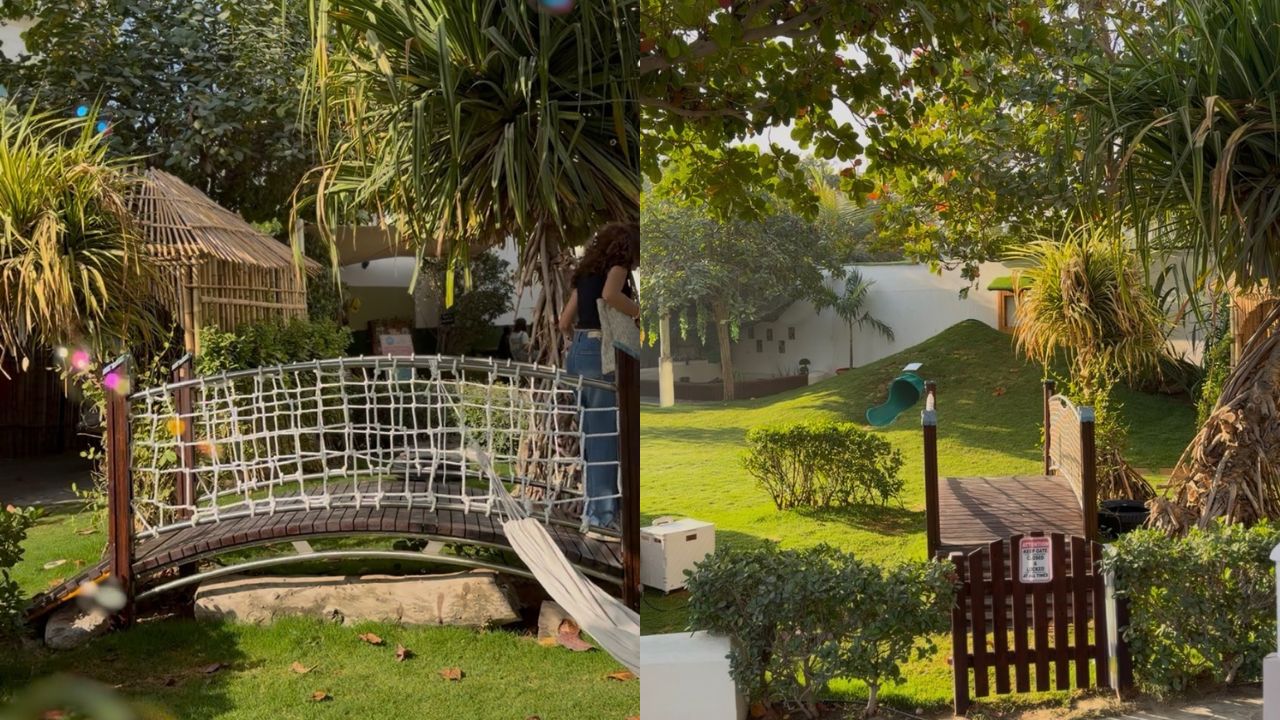
It is 7.30 am in Umm Suqeim. A three-year-old balances on a stepping stone, arms out like an aeroplane. A friend inspects a beetle in a mud kitchen a few metres away. This is Forest Oasis, a nature-led nursery that has recently opened in Dubai, and it is part of a movement quietly reshaping how UAE families think about early education.
Across the country, a growing number of nurseries and schools are turning classrooms inside-out: swapping plastic toys for tree stumps, worksheets for bug hunts, and indoor circle time for something closer to muddy, purposeful chaos – the kind more often associated with woodlands in Scandinavia or the Scottish Highlands.
What is a forest school?
At its simplest, forest school is about learning outdoors, regularly, and on the child’s terms.
Developed in Scandinavia in the 1950s and formalised in the UK in the 1990s, it is built around long-term, repeated sessions in natural environments.
Qualified Forest School Leaders guide rather than direct. Risk is managed, not eliminated. Mud kitchens, knot-tying, den-building, tool use and the slow business of watching an ant cross a leaf all count as purposeful learning.
In the UAE, the model has adapted to fit the landscape. Some schools in Abu Dhabi and Al Ain increasingly describe their programmes as “desert schools” – the same ethos, shaped by different flora, fauna and climate.
Most settings here are forest-school-inspired rather than formally accredited, but the core principles remain consistent: child-led exploration, regular outdoor time, physical challenge and a growing sense of environmental responsibility.
Why nature matters more than ever
“Children today are growing up in faster, more screen-saturated, more structured environments than any previous generation,” says Gemma Robertson, Forest Leader at Forest Oasis and an early years educator of 19 years.
“Nature offers something developmentally irreplaceable – unpredictability, sensory richness, space to think. In a world that is increasingly fast and artificial, nature slows childhood down. And that matters more than ever.”
Over the past two or three decades, she says, children’s independent outdoor play has declined sharply.
“Safety concerns, screen use, busier schedules, and urbanisation have all contributed. What we’ve lost is unstructured exploration. Climbing trees without instruction. Making up games without adult direction. Getting bored and having to invent something new.
“We’ve gained technology and convenience, but we’ve lost time in nature that once happened organically. That loss impacts resilience, confidence and problem-solving in subtle but important ways.”
The research increasingly reflects what many educators see every day. Studies link time in nature to improved motor coordination, wellbeing, connectedness and cognitive function, while separate research highlights stronger executive function – the cluster of skills that underpins attention, self-regulation and learning.
Robertson, a mother of three, is not surprised.
“Physically, outdoor play builds core strength, balance, coordination and spatial awareness in ways indoor environments simply can’t replicate. Emotionally, nature regulates. The rhythm of wind, water, sand, soil – these experiences calm the nervous system.
“We see fewer behavioural challenges outdoors because children’s bodies are able to move and release tension naturally.”
On the anxiety and attention concerns that dominate many parent conversations, her answer is pragmatic.
“Nature lowers cortisol. It slows breathing and heart rate. After outdoor time, my own children are calmer, sleep better and play more creatively.”
You might also like: Top eco-friendly schools in Dubai leading sustainability in 2026
Not less learning, but different learning
One of the most persistent misconceptions around outdoor education is that it is somehow less academic.
In practice, the opposite is often true.
Outdoor environments are cognitively rich precisely because they are not fixed or pre-designed. They invite curiosity. A stick can become anything. A patch of sand can become a road, a recipe or a habitat. Children test ideas, take risks, collaborate and problem-solve in real time.
“It is often thought to be less academic, but in fact, research suggests children often demonstrate stronger executive functioning skills. The difference is that learning is embodied and experiential.”
For parents, this perhaps reframes the conversation. The question is not whether children are learning, but how.
The UAE context: a growing movement
This shift is no longer theoretical. Across the UAE, schools and nurseries are actively building outdoor learning into everyday practice.
In Dubai, several schools have embedded forest-school principles into their early years and primary provision.
At Arbor School, ecoliteracy sits at the heart of the curriculum, with biodomes, outdoor learning spaces and hands-on sessions such as “Muddy Madness” and “Woodtopia” designed to encourage exploration, creativity and safe risk-taking.
At GEMS Metropole, the entire infant phase is structured around a dedicated Forest School environment, alongside a working farm and nature-led learning spaces. Meanwhile, Sunmarke School and DESS Primary Academic City have introduced purpose-built outdoor zones – from gardens and wadis to Forest School areas – ensuring outdoor learning is part of the regular timetable, not an occasional add-on.
Beyond Dubai, the model is being adapted in equally meaningful ways. Brighton College Al Ain pioneered the region’s first Desert School, built around UAE flora and fauna.
In Abu Dhabi, schools such as Raha International School and Cranleigh Abu Dhabi have integrated similar principles into their early years provision, while The British International School Abu Dhabi (BIS Abu Dhabi) has developed its own “Eco Ed-Venture” outdoor learning space to support teamwork, independence and discovery.
Alongside schools, collectives such as Natura Tribe in Al Barari are extending this approach beyond the classroom, offering nature-based programmes, camps and parent-child sessions that bring families back into outdoor learning in a more informal, community-led way.
Taken together, it points to a broader shift: outdoor learning is moving from a niche offering to a mainstream conversation.
When outside isn’t always possible
Of course, the UAE climate presents real constraints. For much of the year, extended outdoor time is not always practical.
Nature-led educators are increasingly addressing this through biophilic design – creating indoor environments that mirror the sensory qualities of nature through natural light, real plants, open-ended materials and calmer, more neutral spaces.
“Research around biophilic design shows that environments reflecting nature reduce stress and improve wellbeing, even when children are physically indoors,” Robertson says.
“In climates like the UAE, this becomes especially important. If we cannot always be outside, we can intentionally create indoor spaces that still feel grounded and connected to the natural world.”
For her, the environment itself is fundamental.
“Environment is not decoration, it is a teaching tool. Busy, overstimulating spaces lead to dysregulation. Calm, intentional ones encourage deeper play, longer concentration and more meaningful social interaction.”
Nature as rhythm, not an activity
For families who cannot commit to a forest-school setting, the message is reassuring: this need not be all or nothing.
“It doesn’t have to be elaborate. Caring for a balcony plant, water play in shaded areas, evening park walks, and growing herbs indoors. Nature doesn’t require wilderness. It requires intention.”
Her advice for parents choosing a nursery is equally clear:
- Ask how much time children spend outdoors each day
- Ask what the outdoor environment offers beyond equipment
- Ask how risk is balanced thoughtfully
- Ask whether learning is genuinely child-led
- Ask how the space is designed to support regulation
“It’s not just about having a playground. It’s about how the environment is used.”
And ultimately, her view of what children need is both simple and powerful.
“They need space. Space to move their bodies fully. Space to get bored and invent. Space to feel the world rather than be directed through it. Children grow best in environments that honour their pace rather than rush it. When we slow down and trust the process of childhood, we see confidence emerge naturally. We see resilience build quietly. We see creativity unfold without pressure.”
After 19 years in early education, and raising three children of her own, she keeps coming back to something deeply instinctive: “I grew up hearing that a little dirt meant a day well spent. I’ve found that to be beautifully true.”
In a region defined by pace and ambition, it is a quiet but powerful reminder: sometimes the most important thing children need is not more, but less – less structure, less noise, and more space to simply be.
Simple ways to bring more nature into everyday family life
You do not need a forest or a formal programme to make this work, says Robertson. Small, consistent habits matter.
When the weather is cool
- Weekend walks or hikes – let children lead
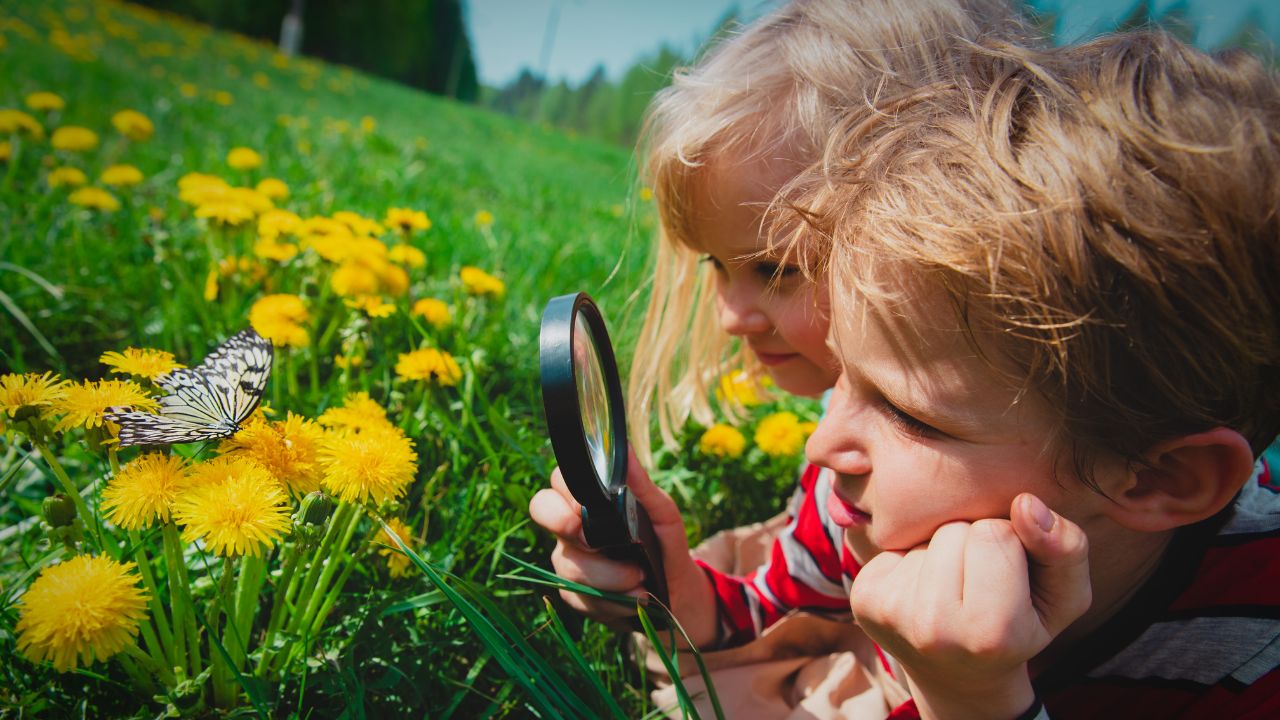
- Evening park visits: bring a magnifying glass and follow their curiosity
- Nature reserves or wildlife spots: ask questions rather than giving answers
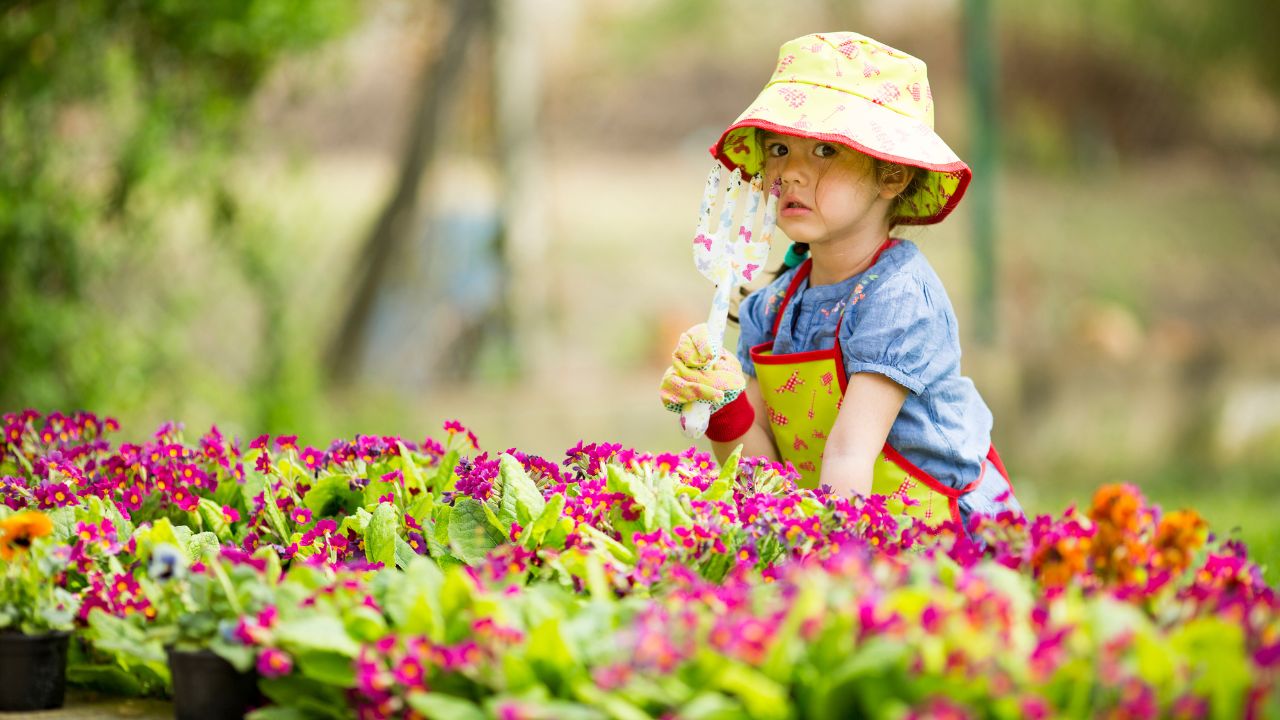
- Grow something outdoors, such as herbs, plants or a small garden patch
- Bikes and scooters build coordination and independence
- Outdoor materials such as sand, sticks and stones can be used for open-ended exploration
When the weather is warm
- Head out early, even 20 minutes makes a difference
- Care for a balcony plant and observe changes over time
- Create a nature table – collect, sort and talk about found objects
- Cook with homegrown ingredients, even something small
- Open windows where possible and notice light, air and sound
The aim is not perfection. It is giving children more opportunities to notice, move, imagine and connect.
For further information, visit forestoasisnursery.com
Follow Yalla for all the latest education news