The “Love Monster” and “Lion Inside” creator on rhyme, confidence and inspiring readers at Emirates LitFest
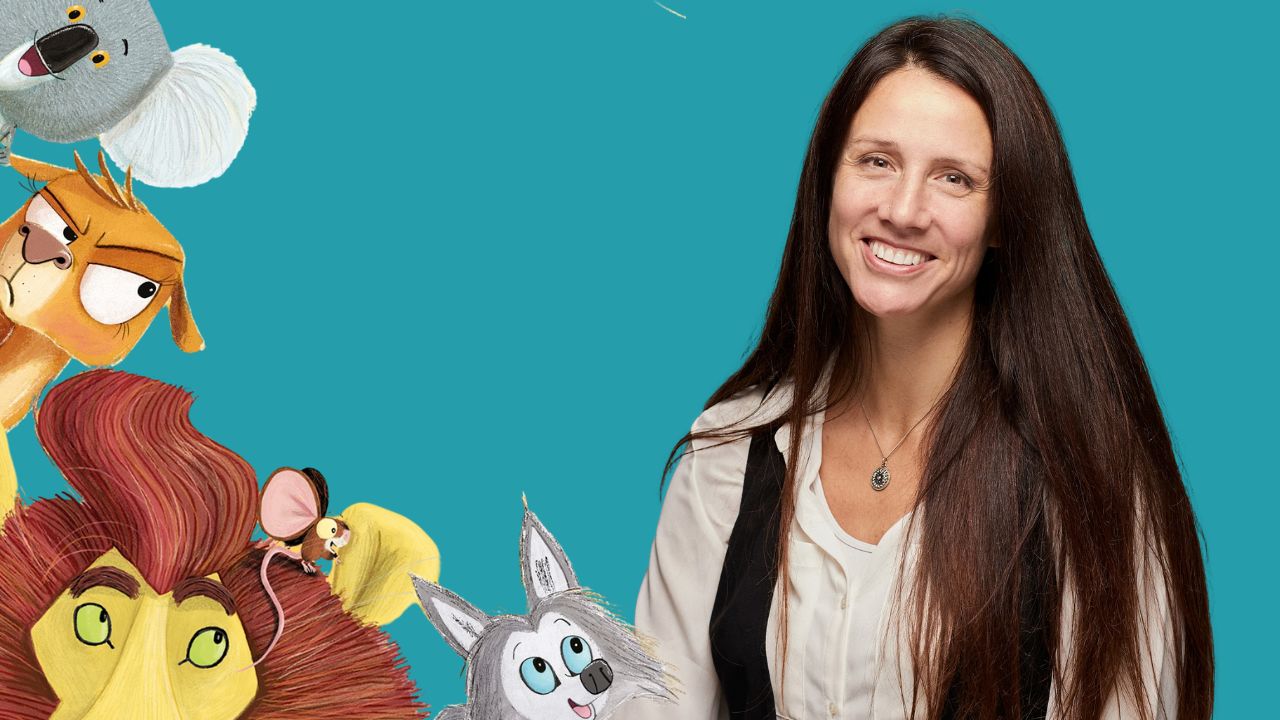
Award-winning author and illustrator Rachel Bright has a rare talent: she helps children name big feelings—worry, confidence, kindness and change—without ever making storytime feel like a lesson.
With 45 books to her name (and millions of copies sold worldwide), her characters, from Love Monster to The Lion Inside, have become modern picture-book favourites for families everywhere.
Rachel is appearing at the Emirates Airline Festival of Literature, and her message to parents is refreshingly simple: model reading. Show how much you love it.
Here, she shares what hooks young children, why animals make such powerful emotional storytellers, and the one question she’d love every family to ask after a book.
What hooks young readers?
The $64 million question! For me, it’s when a book makes you feel something and leaves you a little changed by the back cover. Picture books have a magic tension where the words end and the pictures begin, and that space holds the alchemy. I never rest until every word has earned its place in those precious story times between children and adults.
Rhythm matters too. If it feels good to say, it will feel good to hear. I love surprises and moments of astonishment, and I’m always trying to write big ideas in small packages—ideas that connect whether you’re two or 102. Connection is the secret ingredient for a magical book.
Which childhood books shaped you most?
I grew up in a house full of books, and stories were worlds I could dive into. Winnie the Pooh felt quiet and gentle and safe, but still full of adventure.
My two favourite books are Where the Wild Things Are, a big idea in a small package, with illustrations that shaped my love of ink and printmaking, and The Neverending Story. I was captivated by the idea that a reader could become part of the story, even the hero. I still get goosebumps talking about it.
What comes first when you start a book?
It’s different every time. Sometimes it’s a title, sometimes I see a character, and often I’m writing indirectly about something I’m learning. What never changes is the big idea—something I want to encapsulate in the few words a picture book offers, in a profound way, a funny way, or both.
Why animals for emotions?
I love writing about animals because they help us transcend surface differences and connect on a deeper level. We can all see ourselves in them somewhere, no matter what our lives look like. We all feel happy, sad, afraid, brave—the whole spectrum. Telling these stories through animals helps us all relate.
Children express emotions freely, and I always say there is no such thing as a bad emotion—they are our guidance system. I like writing about befriending feelings and finding ways to navigate them, and animals (plus dinosaurs and monsters!) felt intuitive for that. I always let the story and the idea decide.
Why do “wobbly” characters resonate?
Because it’s the fundamental truth of life. We’re all imperfect, and our imperfections, or our uniqueness, make us perfect as we are. Life isn’t about doing everything perfectly the first time. It’s about learning, evolving, connecting and loving, and doing it all with as much soul and purpose as possible.
What does rhyme do for early readers?
Rhyme is a delight to read aloud and to repeat. Picture books are a special form of literature—no other is shared in quite the same way. I think of picture books as poetry, so rhythm is hugely important. I read my stories aloud to myself more than 100 times while writing, so I can hear where the rhythm needs work.
For children, it’s like learning a song they can join in with. They can finish the last lines and know what’s coming. That confidence is part of the joy.
You might also like: President Sheikh Mohamed reaffirms education as a national priority
If parents have only two minutes after reading, what’s one question you’d love them to ask their child?
Shall we do another quick story?
What do you hope families take from Snail in Space?
It’s about following your own path and knowing there’ll be doubts, missteps, and difficult moments along the way. But when we follow our true calling, we light up the world for others, too. Believing you can is a huge part of the story. I’d love everyone, big or small, to believe in themselves.
Your best advice for raising readers, especially reluctant ones?
Model reading. Show how much you love it. Kids see everything we do, and if they see us reading and loving it, they’ll be inspired to try it too. Sharing books early, even with babies, makes stories part of everyday life.
Make it fun: do the voices, let them point, make the noises, and turn it into a connection. And scatter books around the house so children can choose their favourites and return to them. It sounds small, but it has lifelong benefits.
Advice for children who want to be creatives?
Never doubt that you have everything you need within you to fulfil your dreams and walk your unique path. The world needs you just as you are. Start by doing what you love every day—drawing, writing, singing—whatever it is, even for a little while.
Masters spend thousands of hours becoming masters, so enjoying the journey of discovery matters as much as the destination. You can do it.
What feels universal in children’s emotional worlds?
I think life can be made simple when we consider that, no matter our culture or circumstances, what connects us all – what is universal – is that we all experience the full spectrum of emotions. We all want to love and be loved in return.
The more we celebrate what unites us while embracing uniqueness, the more we can bring our whole selves together for the benefit of many, the better life gets for all. That’s what I love writing about most.
Picasso said the meaning of life is to find your gift and the purpose of life is to give it away. If we all had the chance to give our gifts, there would be more joy than we could imagine.
Lastly, what’s next for you?
I have more books coming in The Lion Inside collection with Jim Field, including a new one called The Most Magnificent Moose, a reminder that comparison is the thief of joy.
I also have a new Dinofeelings book with Chris Chatterton, a collaboration with Richard Jones called Sometimes it Rains (15 years in the making), and illustrated chapter books for slightly older children.
Quick-fire fun questions
- We should all read because… it’s the closest thing to a magic portal, a time machine and a way to live a million lives in one!
- If a koala gave me life advice, it would be…if it was Kevin, he’d say “You can!”
- The animal I most want to write next is… Elephant, Wombat, Monkey and Penguin – they are all fighting for font of the queue. Plus, I also love hummingbirds, seahorses and giant tortoises. So many stories!
- I am most creative when… I let myself play with ideas, and when I’m moving (running, on a train, or on a plane).
- One story world I’d step into for a day…Cutesville, where Love Monster lives—kittens, bunnies and puppies everywhere.
- My brave-but-wobbly moment this week was…having the honour to say a few words at the opening ceremony of your amazing Literary Festival!
For more information on the Emirates Airline Festival of Literature, see emirateslitfest.com
Follow Yalla for more education news